There is a particular kind of silence that falls over a Nigerian city when the rain decides it is in charge.
Not the gentle, romantic kind of rain that taps softly on your window while you sip tea and pretend to be in a movie. No. We are talking about the kind of rain that announces itself as an uninvited guest who has also brought all their friends, the kind that turns your windscreen into a waterfall, your road into a river and your Tuesday afternoon plans into a distant memory.
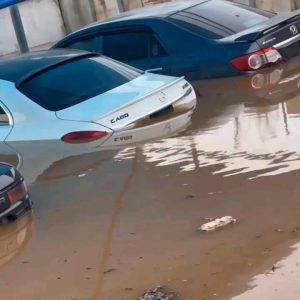 That rain came. And across Nigeria, from Lagos to Port Harcourt, Ibadan to Abuja, every city felt every drop of it. When floodwaters rise on a Nigerian highway, your car is not just stuck in traffic. It is fighting for its life.
Several vehicles stalled after attempting to navigate flooded roads, with owners left facing repair bills and unexpected costs. One motorist whose vehicle broke down after driving through floodwater lamented: “I never knew that the water was very deep. I wouldn’t have risked it.” Punch: That one sentence tells the whole story. Nobody ever thinks it will happen to them. Nobody ever thinks the water is that deep. Until it is.
 In the hardest-hit locations, overflowing rivers and blocked drainage channels left motorists and commuters stranded for several hours. Commercial activities slowed considerably as traders closed their shops early while transport operators suspended operations on several flooded routes. Some motorists abandoned their vehicles and sought alternative routes after floodwaters completely covered sections of major roads. Vanguard News
The 2026 flood outlook identified flood risk spanning 33 out of 36 states and the Federal Capital Territory, with particularly vulnerable areas including riverine and coastal states like Bayelsa, Delta, Rivers, Lagos and Ondo, as well as major cities like Port Harcourt, Ibadan, Kano and Abuja. Neusroom
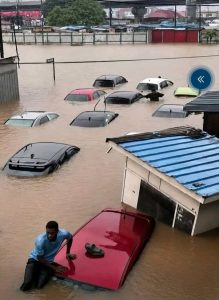 This is not a seasonal inconvenience. This is a national reality.
You cannot control the weather. You cannot personally desilt every blocked canal in Nigeria before the next downpour. The Nigerian Meteorological Agency has advised that rain and thunderstorms will persist across Nigeria, warning that roads may become slippery, visibility reduced, and urging motorists to drive cautiously. Businessday NG
What you can control is how prepared you are when it happens: because it will happen again. Here is what the smartest drivers on Nigerian roads have quietly figured out:
Never attempt deep water. If you cannot see the road beneath the flood, do not drive through it. No meeting, no appointment, no urgency is worth a submerged engine.
Know your route alternatives. When your usual road turns into a swimming pool, you need a Plan B. Study your alternate routes before the rainy season peaks.
Keep your vehicle well-maintained. A car already struggling mechanically does not survive a flood. Regular servicing gives your vehicle a fighting chance when water rises.
Have emergency contacts ready. Your mechanic. Your insurer. A towing service. When your car breaks down on a flooded highway, the last thing you want is to be searching your phone in the rain.
And most importantly, ensure your vehicle is comprehensively insured.
Reference:
https://punchng.com/downpour-cripples-lagos-flood-submerges-cars-strands-motorists/
https://www.vanguardngr.com/2026/06/motorists-commuters-stranded-as-floods-submergelagos-roads/
Extreme flooding and intensifying rainfall variability in Nigeria